Cannot unsee + News/analysis

The Spectrum of Misinformation returns for 2026 with more news, analysis & practical advice for communicators.
In News digest: lockdown blame/measles shame, Cueta crisis disinfo, fake influencers, satellite imaginary, media literacy boost, Tice's hop tips, cancer drug scams, diagnosis by social media, AI orphans, Ebola survivors fight rumours. Plus: Meta pays for rage bait, climate doom downer, and chatbot conspiracy cure. Spotting misinformation everywhere? Obey the advice in Cannot unsee: THEY LIVE, before a message about September secrets.
News digest
In a CNN interview RFK Jr attempted to blame Anthony Fauci for lockdowns during the Covid-19 pandemic while repeating a string of debunked claims about vaccines, RSV and measles.
The Independent warns the resurgence of measles in the US is being fuelled by increasing vaccine skepticism and misinformation.
The Guardian covers evidence a Russian disinformation campaign attempted to use the Cueta migration crisis to destabilise Europe.
New York Times highlights fake AI-generated influencers, often impersonating medics, making misleading health claims to sell supplements on TikTok.
France24 covers Google rolling back a feature enabling users to generate AI visualisations on top of Google Earth satellite imagery after experts said it would be used to create disinformation.
In The Independent Australian researchers say just an hour of media literacy training can help over-55s spot misinformation.
Reform's Richard Tice has been accused of spreading misinformation after suggesting we should "enjoy" heatwaves rather than try to stop climate change.
An analysis by The Guardian has found more than half the X accounts posting about riots in Belfast and disorder in Southampton in June, often with racist or anti-immigration content, were based outside the UK.
BBC investigates fenbendazole and ivermectin being sold as unproven cancer treatments with Macmillan Cancer Support concerned that people are asking about the medicines despite "no clinical evidence" they work.
ABC News investigates an influencer using fake GenAI videos of Ugandan orphans to solicit donations to a foundation run as private firm.
1 in 5 people use social media for health information despite nearly 80% believing this information is false or misleading, according to a survey of 7,000 US adults.
CTV News highlights Canadian doctors worried about parents refusing Vitamin K shots, which protect newborns, because of misinformation.
DW features Ebola survivors in DRC who are helping to counter misinformation about the outbreak and promote awareness.
ABC News reveals Meta is paying creators who produce "rage bait" extremist and anti-vax Facebook content.
BBC reports Snapchat has joined LinkedIn, YouTube and Substack in adding tools to combat AI slop images, video, and writing.
The Conversation covers an experiment suggesting climate doom-type reporting is seen as manipulative and turns people off climate action, while avoiding doom and focusing on solutions is a better strategy.
Science looks at evidence AI chatbots are more persuasive than human debaters, and can even persuade conspiracy theorists to give up their beliefs, with speed of response apparently key to their success.
Cannot unsee: THEY LIVE
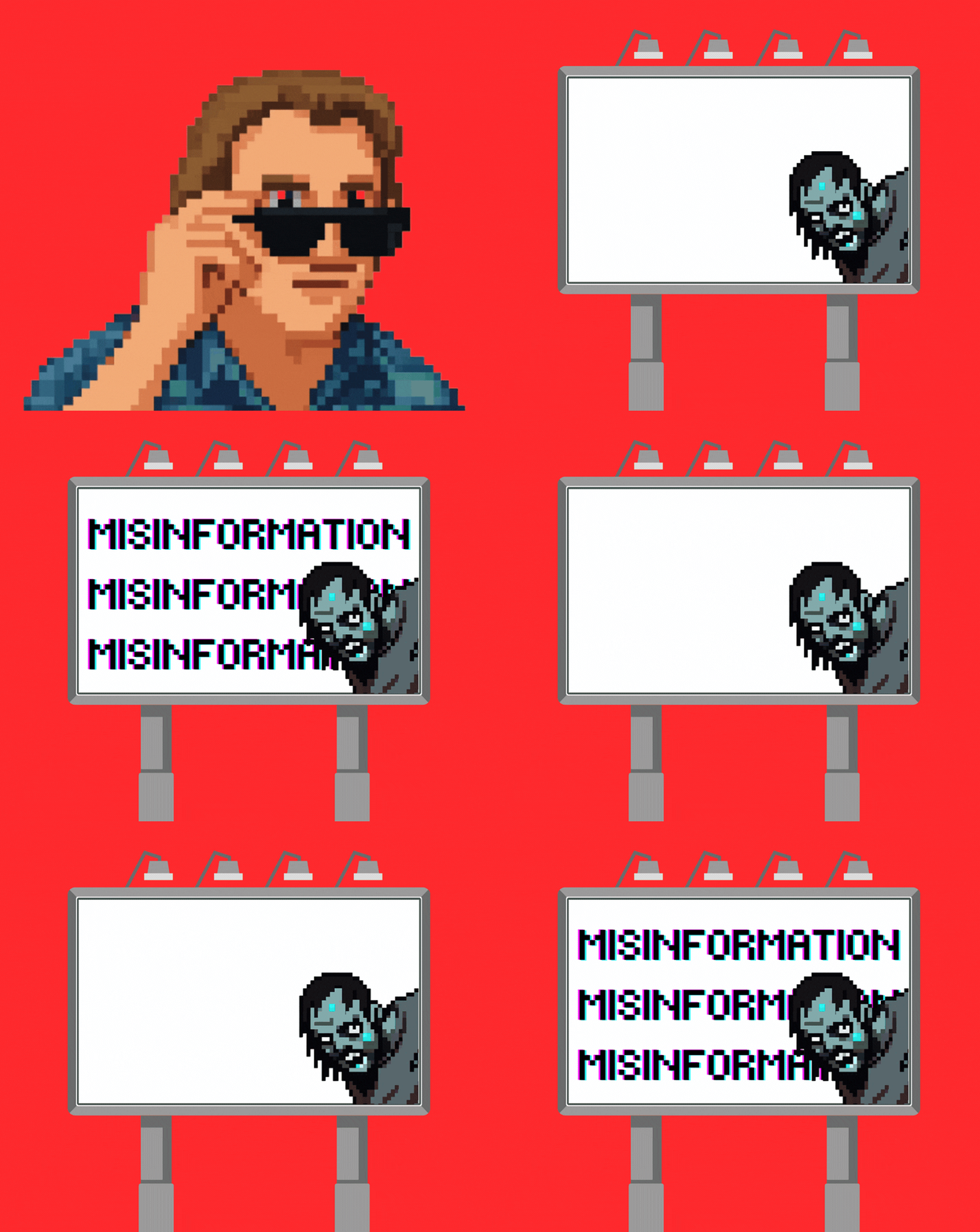
In 80s horror classic THEY LIVE our hero dons special sunglasses that reveal subliminal messages everywhere designed to control people.
It's a brilliant satire of consumerism that's also a paranoid fever dream of an elite (alien) takeover that riffs on conspiracy theory thinking.
For me the 'sunglasses moment' captures what it's like when you start looking for misinformation: from fake news to subtly misleading narratives, you suddenly start seeing it everywhere.
But is it really?
Before you spiral into paranoia or despair, some thoughts:
First off, misinformation isn't views we just disagree with or that go against the majority view. It can be identified by common characteristics including: highly negative emotional language, presenting opinion as fact, impersonation, scapegoating, and conspiracy thinking.
Spot any of these characteristics and, whatever the topic, it's likely you're looking at false or misleading information. After all, would a trustworthy news outlet or individual blame vulnerable groups, use inflammatory language, or pretend to have expertise they don't? Any that do deserve to lose our trust.
Most people don't see all this misinformation: when you actively look for headlines about or examples of misinformation on a topic you'll find it, but this doesn't necessarily mean it's prevalent or that most people are being exposed. It's more that it's visible and findable.
It used to be we only heard fake news and conspiracy theories from that bloke down the pub or eccentric family members. Now, for the first time, online publishing means ordinary people outside established power structures can share false or misleading narratives that reach a mass audience, can go viral and, when amplified by online crowds, don't just make the news but crash stock prices or trigger attacks on individuals.
But exactly which pieces of misinformation you see in your social feeds, or AI chatbot responses, depends on changeable algorithms.
Not all misinformation is harmful: gossip, jokes, and urban myths teach us that people often want to believe false narratives because they are funnier or more entertaining than the truth. Before rushing to respond, it's important to filter out wrong but harmless claims from dangerous ones.
If you filter out harmless claims does the problem disappear?
Unfortunately not. There's plenty of harmful misinformation to go around, especially when you consider blatant fake news isn't the most dangerous kind. Misleading real news stories, for example 'X got the vaccine and died 2 weeks later' when there is no evidence of a causal link, are thought to be very damaging.
The US is an outlier: as predicted the last 18+ months has seen a surge of US misinformation. News headlines are dominated by misinformers such as RFK Jr, Musk, and Trump, while a lot of research and polling is US-centric and focused on the views of Republicans vs Democrats.
Does the US picture reflect what's happening elsewhere?
It's true this US surge is seeding false and misleading narratives around the world (eg Musk's false claims stoking violent disorder in the UK). But it's also true the US situation is unique, with Trump hiring a 'cabinet of misinformers' and allying with US billionaires to spread their claims.
The situation in the UK and other countries is very different from the US where, for example, Covid-era conspiracy theories have radicalised elites and voters, and independent voices in the media, universities and civil society have been attacked and successfully silenced.
While it could happen here, I'd argue what's happening in the US now amounts to a unique experiment to create the world's first misinformation superpower. Time will tell if the impacts on health, the economy, and society deter misinformers from copying the US example.
There's still a lot we don't know: How much dangerous misinformation is circulating in the UK, or France, or Germany, or Australia? In these countries which areas are under attack? What are those misinformation attacks trying to do? What influence are they having?
While there's plenty of anecdotal evidence of exposure and experiments to suggest the damage misinformation can do, we know remarkably little about how many people in the UK or around the world are being exposed to misinformation or what impact it's having on individuals and society.
This is because most governments either aren't taking the threat seriously or are afraid to investigate. Ironically, the US was one of the few countries to invest in counter-misinformation. But the backlash to US Covid measures designed to kerb the spread of false information has seen such work condemned as "censorship", and experts villified, leaving politicians elsewhere wary of stepping into this space.
The only type of misinformation most countries currently monitor is disinformation spread by foreign actors, for instance the work of the EU Disinfo Lab. But that leaves vast swathes of misinformation - about disease outbreaks, vaccines, climate change, immigration, reproductive health etc - going under the radar, with no single government body responsible for countering it.
Yes, eyeballing the flood of misinformation can make you feel like the hero of THEY LIVE, seeing a threat most people are oblivious to.
But if you're having a 'sunglasses moment' it's important to retain perspective, ask: is this misinformation genuinely harmful? If it is, who's seeing it? What impact is it having on them? Just as doomerism or despair aren't helpful reactions, neither is rushing to resist before you understand the threat.
Think all this means we can afford to be a little complacent? Maybe THEY LIVE has one final lesson for us: Just because you're paranoid doesn't mean misinformation isn't out to get you...
September secrets
Back in February LSHTM launched a new network to help members fight dangerous health misinformation in the UK.
Since then we've responded to misinformation about topics including Meningitis B, hantavirus, Ebola, heatwaves, MMR, and Salmonella. However, with staff changes and other urgent priorities our more ambitious counter-misinformation plans have had to wait.
That's about to change: Next month we'll be launching a new project that aims to provide some of the missing evidence about health misinformation in the UK to help communicators, researchers, and policy-makers better understand the problem and potential solutions.
You can get the inside story of the project next time in a special edition. We'll be giving members of the Health Information Integrity Network exclusive insights and data, so if you're not already a member now's the time to join.
You missed a sizzler
Last time we sweated over this summer's blockbuster reports into some of misinformation's hottest topics, I read them so you don't have to.